Supply
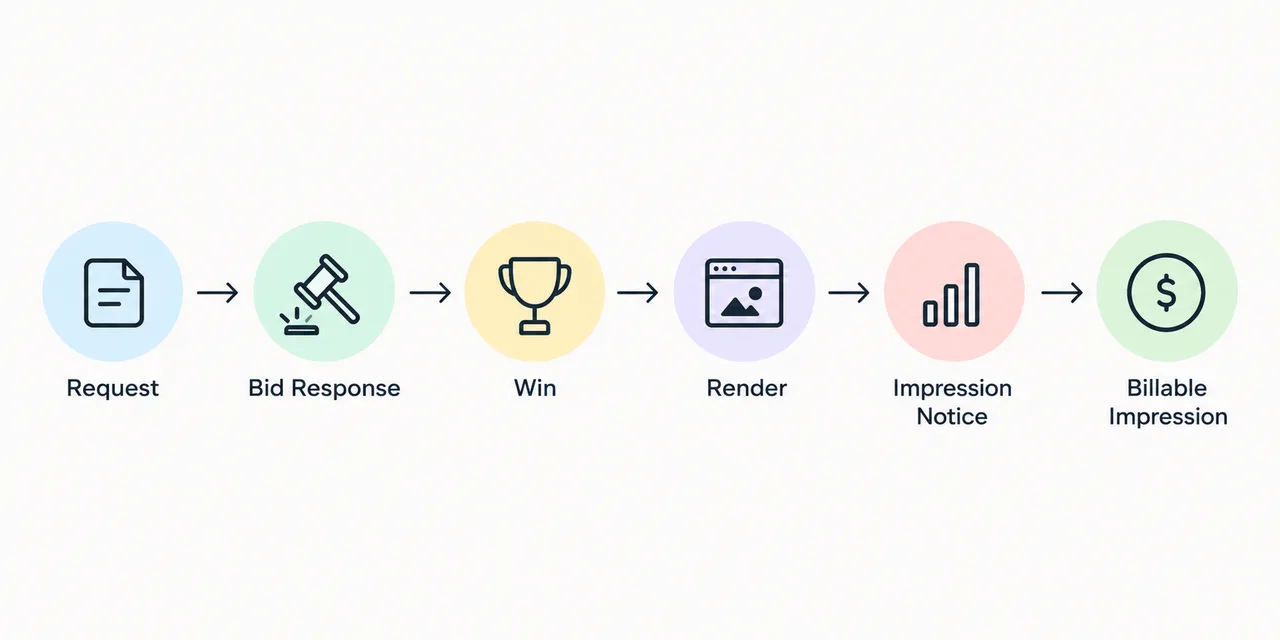
Why Your Numbers Don't Match the Exchange's
Your impression count and the exchange report rarely match perfectly. Learn where numbers diverge, how Adon3 reconciles impressions and when a discrepancy needs investigation
10 Best Adult Ad Networks for Publishers in 2026
Running an adult website in 2026 comes with a unique challenge: finding advertising partners that accept your content and help you generate consistent revenue.
While mainstream publishers can choose from numerous advertising platforms, adult website owners often face stricter content policies, limited advertising options, and varying demand across geographic markets.
But adult traffic still has commercial value.
Advertisers actively seek audiences across adult entertainment, dating, gaming, and other permitted verticals. The challenge is connecting that demand with the right publisher inventory.
Choosing an adult ad network is therefore one of the most important decisions a website owner can make.
A suitable monetization partner should provide access to relevant advertising demand, offer formats compatible with your website, maintain transparent reporting, and establish clear payment terms.
Some publishers prefer established networks such as ExoClick and TrafficStars. Others want flexible programmatic solutions that can support several inventory formats through one integration.
This is where platforms such as Adon3 Exchange become relevant.
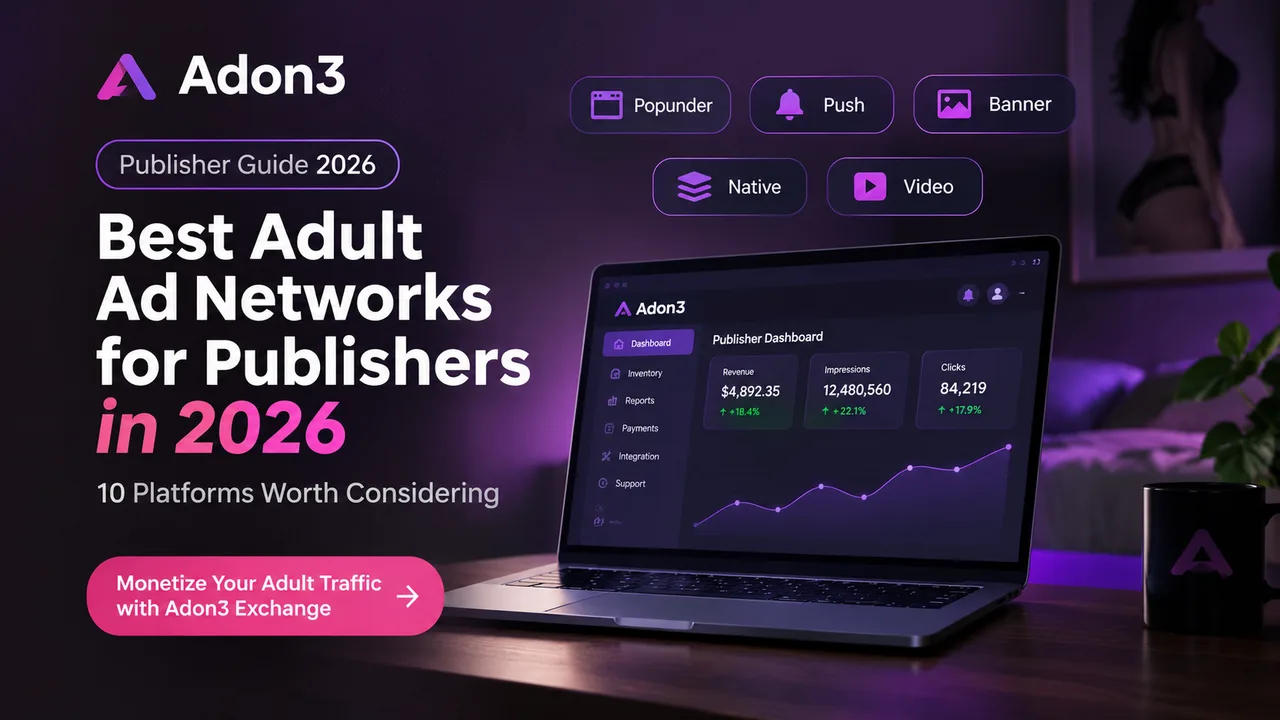
Adon3 connects publishers and supply partners with programmatic advertising demand through formats including Popunder, Push, Banner, Native, and Video.
In this guide, we examine ten advertising platforms worth considering in 2026, explain their differences, and discuss how publishers can select the right monetization strategy.
An adult ad network connects advertisers with websites that offer adult-oriented advertising inventory.
The process is relatively straightforward.
A publisher makes advertising space or traffic available. Advertisers create campaigns targeting particular audiences, countries, devices, and formats. The advertising platform matches eligible campaigns with available inventory.
Depending on the integration, advertisements may be delivered through JavaScript tags, direct links, XML feeds, or programmatic bidding protocols.
Revenue is generally calculated using a defined commercial model.
CPM stands for cost per thousand impressions.
Under a CPM arrangement, revenue is associated with eligible advertising impressions.
For example, if a publisher generates 100,000 billable impressions at an effective CPM of $0.50, the resulting revenue is $50.
This is an illustrative calculation, not a guaranteed adult advertising rate.
CPC stands for cost per click.
Under CPC arrangements, publishers earn revenue when a valid, billable click occurs.
For example, 2,000 billable clicks at $0.01 per click would generate $20.
The distinction between raw clicks and billable clicks is important because advertising platforms may exclude invalid or nonqualifying activity.
CPA stands for cost per action or acquisition.
Payment occurs when a visitor completes a defined action, such as an eligible registration or purchase.
CPA arrangements can work well for publishers with highly engaged audiences, but earnings depend on conversions rather than advertising exposure alone.
There is no universal winner.
CPM may suit publishers with substantial impression volume, while CPC can be relevant for inventory that generates genuine engagement.
CPA may appeal to publishers whose audiences convert reliably.
Publishers should evaluate actual revenue per thousand visits rather than assume that one billing model is inherently superior.
Many mainstream advertising providers restrict sexually explicit content.
Google AdSense, for example, has publisher policies that restrict sexual content, making it unsuitable for many explicit adult websites.
Adult publishers therefore need advertising partners that support their content category.
Specialized advertising networks can connect these publishers with advertisers interested in adult audiences.
However, support for adult traffic does not mean every website will automatically qualify.
Publishers should review restrictions concerning illegal content, misleading placements, prohibited material, invalid traffic, and geographic compliance.
Choosing a platform that understands adult inventory is an important first step toward sustainable monetization.
ExoClick is an established advertising platform serving adult and mainstream inventory.
It supports a range of advertising formats and provides monetization options for publishers operating different types of websites.
ExoClick's broad advertising ecosystem makes it relevant to publishers seeking established adult-focused demand.
Its variety of advertising formats allows website owners to experiment with different monetization strategies.
For example, a publisher operating an adult video website may evaluate video-related advertising opportunities alongside conventional display placements.
A content-focused website may instead prioritize banners or native advertising.
ExoClick offers multiple formats, a recognized advertising marketplace, and programmatic capabilities.
These characteristics can be useful for publishers looking to monetize different inventory categories.
Performance depends on traffic geography, device type, advertiser competition, and placement quality.
A network's established reputation does not guarantee that it will produce the highest revenue for every publisher.
It is therefore sensible to compare performance with additional demand partners.
Best suited for: Publishers seeking an established adult advertising marketplace with multiple monetization formats.
TrafficStars is another recognized platform in adult advertising.
It offers advertising solutions across different formats and provides programmatic integration options.
TrafficStars focuses on advertising markets that include adult-oriented inventory.
This makes it relevant to publishers looking for demand specifically suited to their audiences.
Its technical capabilities may also appeal to publishers and supply platforms that prefer automated advertising integrations.
The platform supports different advertising formats and provides access to an adult-oriented advertising ecosystem.
Publishers may find it useful when testing alternative demand sources.
Actual earnings depend on traffic composition and advertiser demand.
Publishers should review available formats, payment terms, and traffic requirements before integrating.
Best suited for: Adult publishers seeking an established advertising platform with flexible inventory options.
Adon3 Exchange is a programmatic advertising platform that connects publishers and supply partners with advertising demand.
For adult website owners, one of the most important considerations is monetization flexibility.
Different websites attract different audiences, and not every advertising format performs equally well.
Adon3 supports several inventory types, allowing publishers to explore different monetization approaches rather than relying on one format.
Adon3 supports inventory including:
Popunder: Advertising opportunities associated with additional browser windows or tabs.
Push: Advertising delivered through supported push-related formats.
Banner: Traditional display placements within website layouts.
Native: Advertising placements designed to fit within content environments.
Video: Advertising inventory associated with supported video placements.
Availability and implementation requirements depend on the integration and inventory type.
Adon3 supports XML CPC feeds and OpenRTB integrations.
For publishers or supply partners operating POP and Push inventory, XML can provide a structured way to request advertising demand.
For supported display, native, and video inventory, OpenRTB offers an auction-based integration method.
This can be particularly useful for publishers managing multiple websites or operating their own advertising infrastructure.
Rather than evaluating monetization through one headline CPM figure, publishers can explore different formats and measure actual revenue.
Adon3 also emphasizes reporting visibility and traffic-quality controls.
These capabilities are relevant because successful monetization depends on valid advertising activity, not merely large numbers of ad requests.
A publisher can begin by identifying a suitable portion of inventory, selecting the appropriate integration method, and monitoring the resulting performance.
Useful metrics include revenue per thousand visits, valid clicks, eligible impressions, fill rate, and revenue by geographic segment.
The goal is to determine whether Adon3 provides incremental value for that publisher's specific traffic.
Best suited for: Adult publishers and supply partners seeking multiple monetization formats and programmatic integration options.
Explore Adon3: https://adon3.com
Become a publisher: https://app.cpc.adon3.com/signup
Adsterra is an advertising network offering monetization solutions across several advertising formats.
Its publisher offering includes options beyond conventional banners.
Publishers may evaluate Adsterra when looking for alternative monetization formats or additional advertising demand.
The platform is particularly relevant to website owners interested in experimenting with different placement types.
Multiple advertising formats can help publishers test different approaches without relying entirely on traditional display placements.
Website eligibility, content policies, and available demand should be verified before integration.
Publishers should also evaluate the effect of higher-impact advertising formats on visitor experience.
Best suited for: Publishers looking to experiment with several monetization formats.
EroAdvertising focuses on adult advertising.
This specialization makes it relevant to publishers whose audiences fall within supported adult content categories.
An adult-focused advertising platform may provide access to campaigns specifically targeting adult audiences.
This can be useful for publishers who want to work with a provider familiar with their content category.
Its specialization may suit publishers looking for adult-oriented advertising demand.
Publishers should evaluate supported formats, geographic demand, reporting capabilities, and current payment terms.
Best suited for: Adult website owners seeking a specialized advertising provider.
ClickAdilla operates in performance advertising and offers multiple advertising formats.
It is relevant to publishers evaluating alternative monetization partners and programmatic advertising opportunities.
Publishers may be interested in its format selection and performance-oriented advertising ecosystem.
Its integration options can also be relevant to technically sophisticated supply partners.
Different formats create opportunities to test monetization beyond a single display placement.
Publishers should verify which integrations and inventory categories are currently available to supply partners.
The fact that a network sells a particular advertising format does not automatically mean it accepts every type of third-party supply.
Best suited for: Publishers exploring performance advertising and additional demand sources.
HilltopAds is an advertising network associated with publisher monetization and performance advertising.
It offers options that may appeal to publishers looking beyond standard banner advertising.
The platform can be worth evaluating for publishers seeking alternative monetization approaches.
Its advertising offering may suit publishers interested in performance-oriented formats.
Publishers should verify current format support, adult-content eligibility, and payment requirements.
Best suited for: Publishers comparing alternative performance advertising networks.
PopCash is known for popunder advertising.
Unlike broader platforms that support many formats, it is particularly associated with POP traffic.
Publishers with suitable popunder inventory may prefer a platform focused on that format.
A specialized approach can simplify the comparison of popunder monetization opportunities.
Popunder delivery is affected by browser restrictions, user interactions, and frequency controls.
Publishers should also consider whether relying on a single format limits their overall revenue potential.
Best suited for: Publishers primarily interested in popunder monetization.
Mondiad operates in digital advertising and offers several performance-oriented advertising formats.
Publishers may consider it when looking for additional monetization options.
Its advertising offering can be relevant to publishers testing formats such as push-related advertising and other performance inventory.
It provides another potential source of advertising demand for eligible publishers.
Current publisher acceptance, inventory requirements, and payment conditions should be verified before integration.
Best suited for: Publishers exploring alternative performance advertising platforms.
RollerAds is associated with performance advertising, particularly push-related formats.
It can be relevant to publishers interested in monetizing eligible notification-based inventory.
Publishers with suitable push inventory may want to evaluate demand from a platform specializing in performance advertising.
A focused advertising approach may appeal to publishers already using push-based monetization.
Push advertising requires appropriate permissions and compliance with browser and platform rules.
Publishers should verify available integration options and current publisher requirements.
Best suited for: Publishers evaluating push-oriented advertising monetization.
Comparing advertising networks requires more than reviewing their supported formats.
A platform may offer attractive features but still perform poorly for a particular website.
Publishers should evaluate several factors before choosing a partner.
Advertiser demand varies between countries.
Traffic from the United States, Germany, India, Brazil, and other markets may have different revenue characteristics.
Publishers should analyze their audience distribution and compare earnings by country.
A network with strong demand for one geographic segment may be less competitive for another.
A website's layout and audience behavior influence which formats are suitable.
For example, a content-focused website may perform well with native advertising.
A website with high pageview volume may benefit from carefully positioned banners.
Publishers with eligible POP inventory may want to test popunder monetization.
Platforms such as Adon3 support multiple inventory formats, making them worth evaluating when publishers want more flexibility.
CPM and CPC arrangements should not be compared using headline rates alone.
Instead, publishers should calculate actual revenue per thousand visits.
Consider two hypothetical scenarios.
Scenario A
A website generates 100,000 paid impressions at an effective CPM of $0.40.
Total revenue is $40.
Scenario B
Another monetization setup generates 3,000 billable clicks at $0.02 per click.
Total revenue is $60.
Scenario B produces more revenue in this example, but only if the underlying traffic volume and visitor experience are comparable.
The numbers are illustrative and should not be interpreted as typical market rates.
Accurate reporting is essential.
Publishers should understand the difference between ad requests, responses, impressions, clicks, and billable events.
An advertising platform may return a response without the advertisement ever being displayed.
Likewise, some clicks may be excluded from billing because they fail traffic-quality requirements.
Clear reporting helps publishers investigate discrepancies and make informed decisions.
Before integrating, publishers should review payment schedules, minimum payout thresholds, supported payment methods, and invalid-traffic deductions.
A network that appears profitable but has unclear settlement conditions may create unnecessary financial risk.
Small publishers may prefer straightforward advertising tags.
Larger publishers, ad networks, and supply platforms may need XML or OpenRTB integrations.
Adon3's support for programmatic integration methods can be useful for publishers with more advanced infrastructure.
The correct integration depends on the inventory being supplied and the technical requirements of the exchange.
One of the most common monetization mistakes is relying entirely on a single advertising partner.
Advertiser demand changes over time.
A network may have strong demand for desktop traffic but weaker demand for certain mobile markets.
Campaign budgets may also fluctuate.
If all inventory depends on one demand source, these changes can affect total revenue.
Diversification can help publishers compare performance and reduce reliance on one partner.
However, diversification should be implemented carefully.
Adding several advertising scripts to the same page without coordination can increase latency, create competing advertisements, and complicate reporting.
A better approach is to allocate controlled traffic segments to different monetization partners.
For example, a publisher might compare an existing network with Adon3 using similar traffic segments.
The publisher can then evaluate revenue, technical performance, and visitor experience before making a larger decision.
Selecting an advertising network is only the beginning.
Publishers should continuously optimize their monetization setup.
Genuine visitor activity is essential for sustainable advertising revenue.
Artificial clicks, automated traffic, and misleading interactions can lead to deductions or account restrictions.
Focus on attracting real users and maintaining transparent traffic sources.
Advertisements should be positioned where they can generate legitimate engagement without obstructing content.
Excessive advertising may increase short-term activity while reducing visitor retention.
Different audiences respond differently to advertising.
Publishers should compare banners, native placements, push inventory, and popunders where appropriate.
The best-performing format should be determined through actual data.
CPM alone does not provide a complete picture of publisher earnings.
Revenue per thousand visits helps compare monetization arrangements that use different billing models.
If your current monetization setup is underperforming, testing an additional advertising partner may reveal new opportunities.
Adon3 Exchange provides an option for publishers seeking programmatic demand across multiple advertising formats.
Publishers can explore the available integrations and evaluate performance using their own traffic.
Adon3 may be worth evaluating if you want a monetization platform that supports multiple inventory types and programmatic integration methods.
It is particularly relevant to publishers and supply partners looking to monetize POP, Push, Banner, Native, or Video inventory through supported integrations.
Its XML CPC feeds and OpenRTB capabilities provide different technical approaches depending on the inventory type.
However, no exchange can guarantee the same earnings for every website.
Actual results depend on geographic distribution, traffic quality, advertising format, advertiser demand, and implementation.
The most reliable approach is to begin with a controlled test and compare the results against your existing monetization setup.
If you are currently using ExoClick, TrafficStars, or another adult advertising network, Adon3 can be evaluated as an additional monetization partner rather than necessarily replacing your existing setup.
The best adult ad network for publishers in 2026 depends on more than brand recognition or advertised CPM figures.
ExoClick, TrafficStars, Adsterra, EroAdvertising, ClickAdilla, HilltopAds, PopCash, Mondiad, RollerAds, and Adon3 all represent different options worth evaluating.
Some focus on particular advertising formats, while others offer broader monetization capabilities.
For publishers who want flexibility across several inventory types, Adon3 Exchange is an option worth testing.
Its programmatic infrastructure supports multiple advertising formats and integration methods, giving publishers a way to explore additional demand opportunities.
The most important step is to evaluate results using real traffic, clear reporting, and a sustainable monetization strategy.
Ready to explore new monetization opportunities?
Join Adon3 Exchange and discover how your website inventory can connect with programmatic advertising demand.
Register as an Adon3 publisher: https://app.cpc.adon3.com/signup
Learn more about Adon3: https://adon3.com
There is no single best network for every publisher. ExoClick, TrafficStars, Adon3, and other platforms offer different formats and monetization approaches. The best option depends on your traffic and requirements.
Yes. Specialized adult advertising networks and programmatic exchanges support eligible adult inventory.
There is no universal highest-paying network. CPM varies by country, device, format, traffic quality, and advertiser demand.
Often yes, subject to the platforms' policies. Publishers should manage placements and reporting carefully to avoid conflicts.
Adon3 supports adult and mainstream inventory subject to applicable content and traffic-quality requirements. Publishers can explore supported formats and integration methods.
Yes. Adon3 documents XML CPC integration for POP inventory, alongside other supported advertising formats.
Visit https://app.cpc.adon3.com/signup to begin publisher registration.
Not necessarily. A controlled test using a portion of your traffic can help determine whether another monetization partner provides incremental value.
Your impression count and the exchange report rarely match perfectly. Learn where numbers diverge, how Adon3 reconciles impressions and when a discrepancy needs investigation
Google AdSense can work with some gambling websites, but restrictions apply. Learn the rules and alternative ways to monetize gambling traffic.
Adult traffic can generate significant revenue when monetized correctly. Learn how to combine ads, affiliate offers and premium content while protecting user experience.