Supply
Why Your Numbers Don't Match the Exchange's
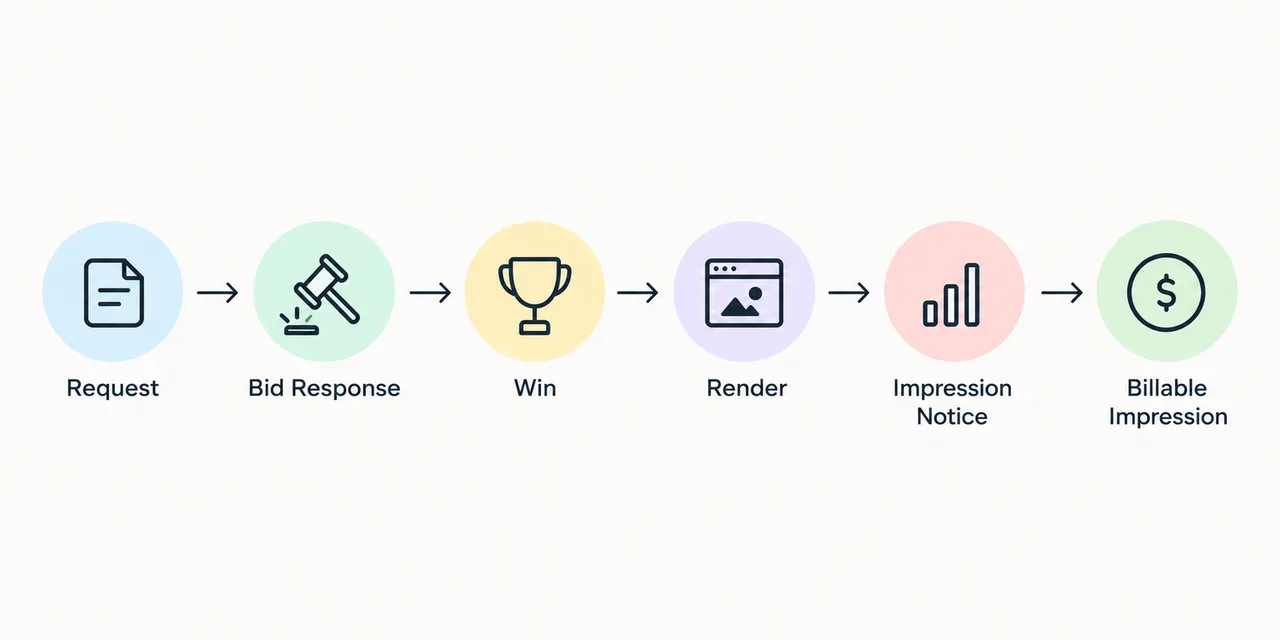
Your impression count and the exchange report rarely match perfectly. Learn where numbers diverge, how Adon3 reconciles impressions and when a discrepancy needs investigation
Adult traffic can be highly monetizable, but the right ad formats, traffic strategy and user experience make the difference. Here’s how adult publishers can turn their website traffic into sustainable revenue.
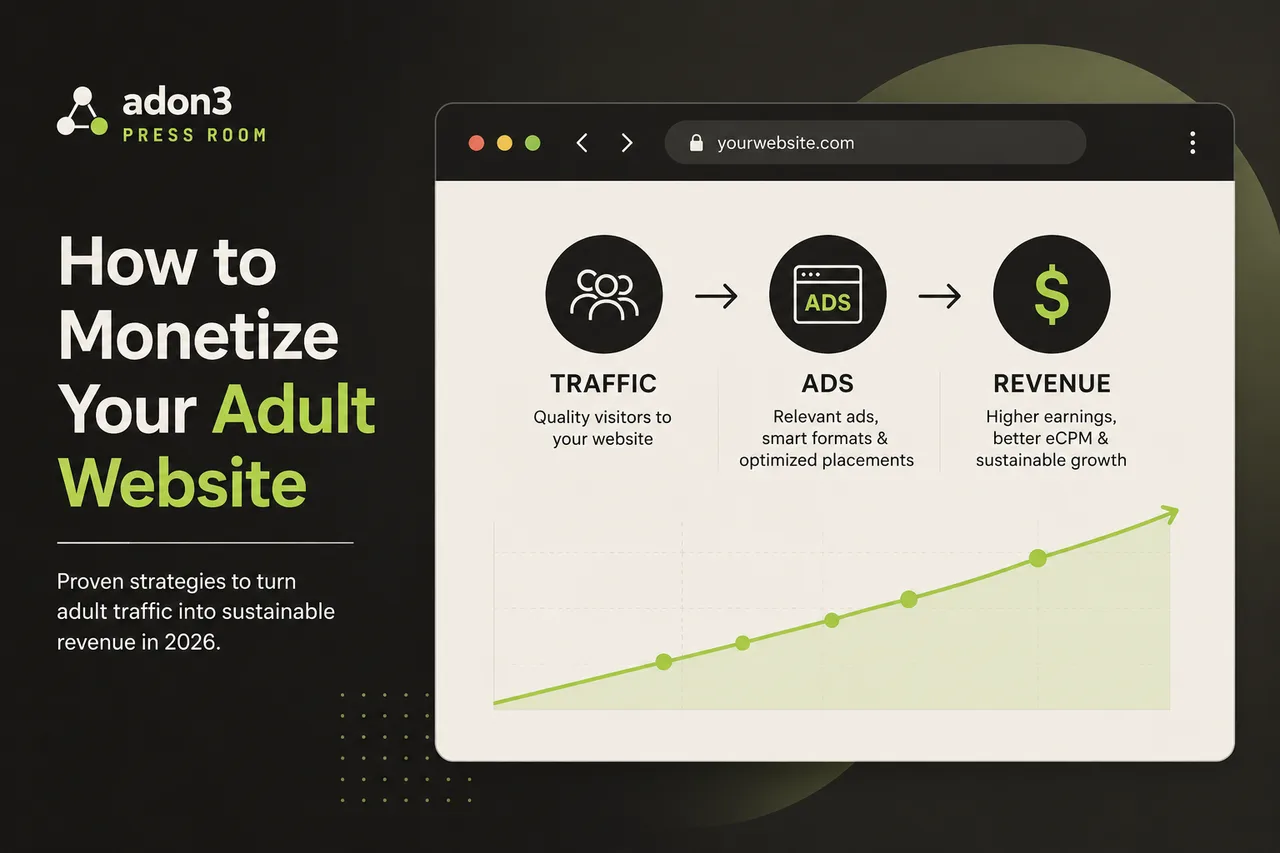
Running an adult website can generate significant traffic, but traffic alone does not create revenue.
Adult publishers operate in a different advertising environment from mainstream websites. Many conventional advertising platforms restrict sexually explicit content, which means publishers generally need specialized advertising partners and monetization strategies designed specifically for adult inventory.
The opportunity, however, is substantial. Adult traffic attracts advertisers across dating, gaming, entertainment and other performance-driven verticals. The challenge is finding the right balance between revenue, ad quality and user experience.
The strongest adult websites rarely depend on a single revenue source. Instead, they combine several monetization methods and continuously optimize them based on GEO, device, traffic quality and user behavior.
For most publishers, an advertising network or exchange is the easiest place to begin.
Instead of finding advertisers individually, the publisher integrates an ad tag or another technical connection with an advertising platform. Advertisers then compete for or purchase that inventory.
Depending on the platform and format, publishers may earn through:
CPC (Cost Per Click): revenue when a visitor clicks an advertisement.
CPM (Cost Per Mille): revenue for every 1,000 monetized impressions.
CPA (Cost Per Action): revenue when the referred visitor completes a specified action.
There isn't one universal CPC or CPM that represents the value of adult traffic. Geography, device, format, advertiser demand and traffic quality can all substantially change what an impression or click is worth.
This makes testing particularly important. Rather than judging a monetization partner solely by its advertised rate, publishers should compare the actual revenue generated from the same traffic.
Popunder advertising remains an important format within adult traffic monetization.
A popunder opens an advertiser's landing page behind the user's active browser window. Because the advertisement doesn't occupy a permanent position inside the publisher's page, it can generate additional revenue without replacing the website's main content.
For adult publishers with substantial traffic, even a small amount of revenue generated per visitor can become meaningful at scale.
But frequency matters.
Triggering too many pops may increase short-term ad impressions while damaging session duration, page views and returning-user rates. Publisher testing reported by Kadam illustrates this trade-off: less aggressive pop frequency produced lower immediate RPM in one comparison but better engagement and greater overall monetization opportunities.
The objective therefore shouldn't be:
How many ads can I show?
It should be:
How much revenue can I generate from each visitor without making them leave?
Frequency caps, device segmentation and performance monitoring are essential.
Push-oriented formats provide another way to monetize adult traffic.
Traditional push advertising depends on users subscribing to browser notifications. In-page push, meanwhile, displays a notification-style advertisement directly inside the webpage and does not require the same browser subscription process.
These formats can complement popunder inventory rather than replacing it.
For example, a publisher might use:
Popunder → primary performance format
In-page push → additional page-level monetization
Banner/native → supplementary inventory
The exact combination should be tested rather than assumed. Recent industry reporting continues to show popunder and push/in-page formats accounting for a substantial portion of adult advertising inventory.
Traditional display advertising still has a role.
Banner placements can be positioned around content, navigation areas, sidebars or video players. Native advertising can go further by matching the visual structure of the website.
These formats generally interfere less with navigation than aggressive pop-based monetization.
That makes them particularly useful when user retention matters more than maximizing immediate revenue from a single session.
Instead of filling every available space with advertising, identify placements that users naturally see while browsing.
A few well-positioned advertisements can be more valuable than a page overloaded with low-performing inventory.
Not every visitor or page impression can be effectively monetized with a traditional advertisement.
That's where Direct Links or SmartLinks can become useful.
Rather than displaying an advertisement, the publisher sends selected traffic through a monetization URL. The advertising platform can then route that visitor toward an appropriate campaign based on factors such as country and device.
Direct links can be incorporated into suitable buttons, exit traffic or other publisher-controlled placements.
This can provide an additional revenue layer for traffic that would otherwise leave the website without generating revenue.
Advertising isn't the only option.
Adult publishers can also work directly with affiliate programs.
Instead of earning for an impression or click, the publisher receives a commission when the referred visitor performs an action such as registering or purchasing a service.
This creates an important distinction.
Advertising monetizes traffic volume.
Affiliate marketing monetizes user intent.
A publisher can therefore run both simultaneously.
Advertising generates baseline revenue across a large percentage of visitors, while carefully selected affiliate offers can produce higher payouts from users who convert. Hybrid monetization combining advertising and affiliate offers is common among adult publishers.
Publishers with loyal audiences can move beyond advertising altogether.
Premium memberships, subscriptions and paid content allow publishers to monetize users directly rather than relying entirely on advertisers.
A simple model might look like:
Free visitor → advertising revenue
Interested visitor → affiliate revenue
Loyal visitor → subscription revenue
These models don't have to compete with each other.
A website can provide free advertising-supported content while offering an optional premium experience with additional features or fewer advertisements.
The important consideration is payment infrastructure. Adult businesses can face additional restrictions from mainstream payment providers, so publishers need payment partners that explicitly support their business model and jurisdiction.
One million visitors aren't necessarily worth twice as much as 500,000 visitors.
Where those visitors come from matters enormously.
Advertiser demand differs by country, and the same advertisement can have very different economic value depending on the user's GEO, device and other characteristics. Industry analysis of adult traffic likewise identifies geography, format, device and traffic quality as major factors determining advertiser value.
Publishers should therefore monitor revenue by:
Country → Device → Format → Placement → Revenue
Don't simply look at total revenue.
Understanding which segments generate revenue allows you to make better decisions about where and how advertisements are displayed.
This is where many publishers make their biggest mistake.
More advertising does not automatically mean more revenue.
Imagine that aggressive advertising increases revenue per page by 20%, but causes visitors to view 40% fewer pages.
You've technically improved the advertisement's performance while making the website less profitable.
Monitor metrics such as bounce rate, pages per session, session duration, returning visitors, ad CTR and revenue per thousand sessions alongside CPM/CPC.
The goal should be maximizing revenue per visitor over time, not maximizing the number of ads displayed on one page.
Advertisers ultimately want traffic that produces results.
Bot traffic, automated clicks, manipulated impressions and other invalid activity may temporarily inflate statistics, but they reduce advertiser performance and can result in traffic being filtered or accounts being suspended.
Clean traffic creates a much healthier cycle:
Quality traffic → better advertiser performance → stronger demand → better publisher monetization
Publishers should therefore understand their traffic sources and monitor unusual changes in CTR, geography, devices and referral patterns.
Monetization begins with acquiring traffic.
Adult websites can still be indexed by search engines, although explicit content is treated differently.
Google recommends clearly identifying explicit pages. For example, publishers can use adult-rating metadata, and websites containing both explicit and non-explicit material can separate explicit sections onto a dedicated domain or subdomain. Google also recommends allowing Googlebot to crawl appropriately rather than blocking it with an age gate.
For publishers relying on organic traffic, technical SEO remains important:
Fast pages, descriptive titles, internal linking, crawlable content, video metadata, sensible site architecture and mobile performance all contribute to discoverability.
For websites containing user-generated adult content, moderation is particularly important. Google specifically recommends publisher verification and moderation processes to reduce harmful or illegal user-generated material.
There is rarely a single "best" adult monetization format.
A stronger strategy is to build several revenue layers.
For example:
Layer 1 — Popunder
Generate revenue from general traffic.
Layer 2 — In-Page Push / Display
Monetize page views without relying entirely on pops.
Layer 3 — Direct Links
Capture traffic that cannot easily be monetized through conventional placements.
Layer 4 — Affiliate Offers
Generate higher-value CPA revenue from users with stronger intent.
Layer 5 — Premium Content
Monetize your most engaged audience directly.
Then measure every layer independently.
This reduces dependence on a single advertiser, campaign or pricing model.
At Adon3, our approach is built around a simple idea: publishers shouldn't have to destroy their user experience to monetize their traffic.
Adon3 provides publishers with access to performance-focused advertising demand across multiple GEOs, with monetization options designed for publishers working with adult as well as mainstream traffic.
Publishers can begin with a limited portion of their inventory, measure actual performance and expand the integration when the numbers make sense.
Instead of replacing an existing monetization setup, Adon3 can also be tested as an additional or backfill revenue layer.
This allows publishers to compare performance using their own traffic before making a larger commitment.
The best adult monetization strategy isn't necessarily the network promising the highest CPM.
It's the setup that produces the highest sustainable revenue from your audience.
Start with one or two formats. Establish your baseline revenue. Introduce additional placements gradually. Compare GEO and device performance. Apply frequency caps. Monitor user engagement.
Once you've identified what works, scale it.
Because ultimately, successful adult website monetization comes down to three things:
Quality traffic. Strong advertiser demand. A user experience that keeps visitors coming back
Your impression count and the exchange report rarely match perfectly. Learn where numbers diverge, how Adon3 reconciles impressions and when a discrepancy needs investigation
Google AdSense can work with some gambling websites, but restrictions apply. Learn the rules and alternative ways to monetize gambling traffic.
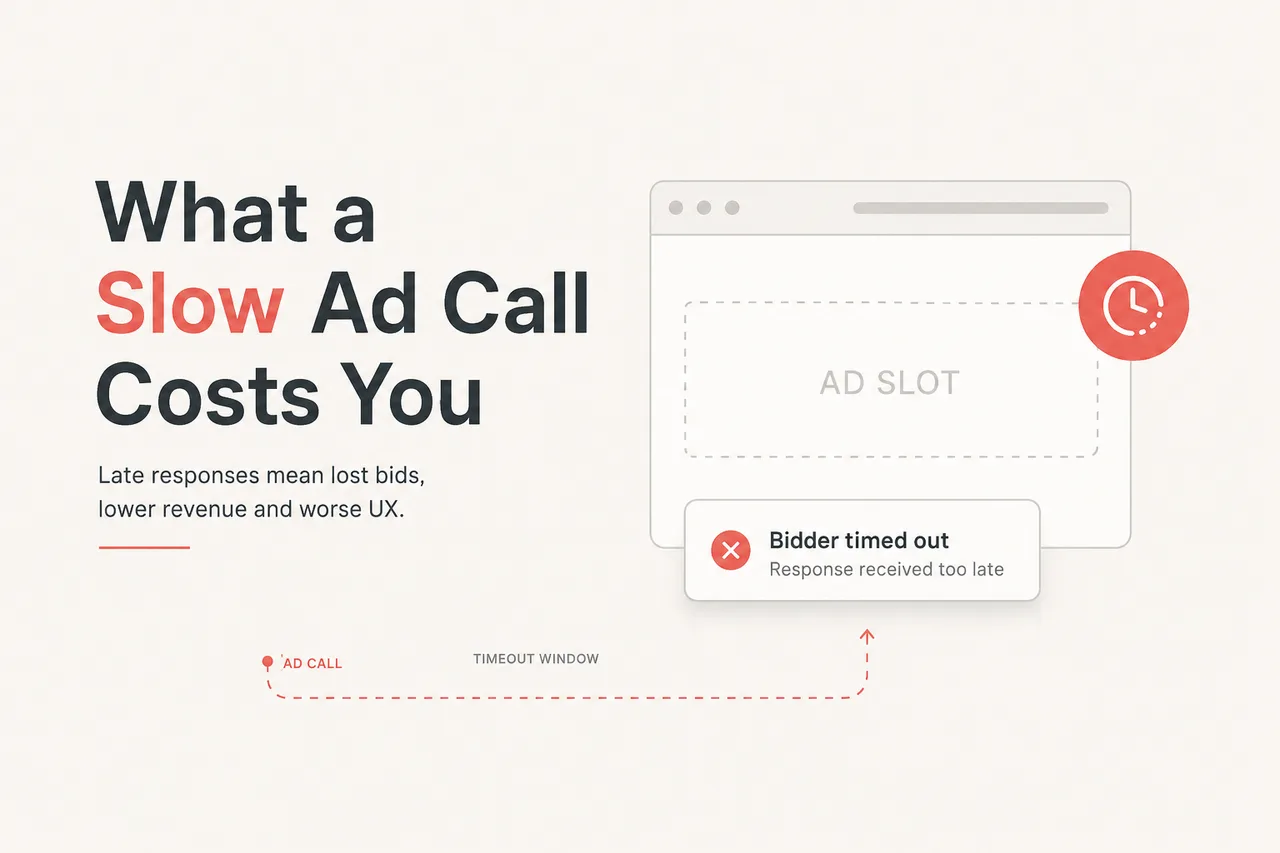
A bidder that answers one millisecond after your timeout is not a low bid. It is no bid at all — logged, discarded, and gone from the auction. Here is the timeout mechanic, the latency budget behind it, and how to tune the window without cutting off the demand you want.